
How Creative Breakthroughs Can Come Even at the Unlikeliest of Times
In my case, an epiphany comes while lying awake in the middle of a sleepless night in Paris.

Having written here last week about my upcoming 40th wedding anniversary trip to Paris, a number of you gorgeous and cultivated (and surely soon to be paid) subscribers to Getting Personal asked how it went.
In our younger days, Marjorie and I would have made lots of plans, and tried to squeeze as much as we possibly could into our four full days there. Perhaps because we’ve been to Paris multiple times, perhaps because we’re no longer youthful, we went with no plans other than to spend quality time at the Musée d’Orsay, which for numerous reasons is our favorite museum in all the world. It turned out to be just a five minute walk from where we stayed, a cozy Airbnb with a view over the Paris rooftops I couldn’t get enough of.
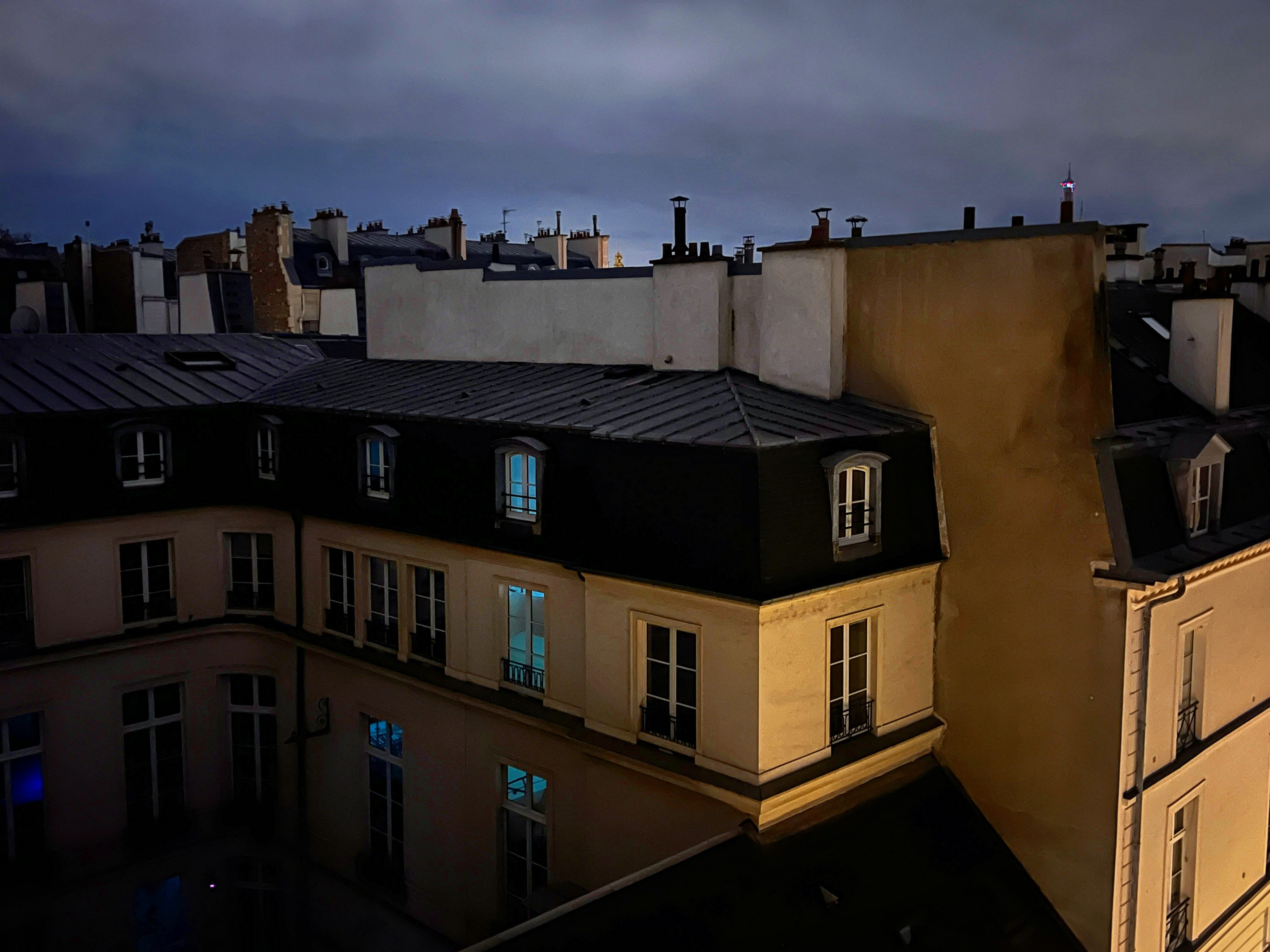
Oh, wait, there was one other small agenda item. A half-day of shooting for my love letter film Betty & Henri (& Me). I didn’t need much, but it would likely be the final scene of the film, the conclusion to my ten-year quest to solve the mystery at the heart of the story, that’s all. No pressure.
Nevertheless, we chilled out, slept late, spent leisurely mornings in the light-filled living room reading and sipping strong coffee, took slow walks around the neighborhood, discovered some great local cafes and restaurants and, well, they don’t call it the city of love for nothing. We tried our best to un-clutter our over-cluttered minds and not to do a lick of work.
So, the last thing I expected was having a key creative breakthrough that would change the entire way I frame the story of my film.
The filming itself would be easy peasy, or so I thought. My friend Scott Harris, an accomplished filmmaker and DP living in Paris, would shoot me and Marj in a number of street locales ending up at a room full of Monets at the d’Orsay, which are directly referenced in the letter and are pivotal to the film’s narrative. There was no need for a sound person to record anything we were saying. All I was looking to do was capture a montage of our return to Paris ten years after the events that set off my search. Scott would bring his camera for the street scenes, and use my iPhone to shoot inconspicuously inside the museum.
When making documentaries I’ve learned to trust my instincts, and in this case it was not to over-prepare. Knowing that Marj doesn’t exactly enjoy being filmed, and this would be the first time she’d be filmed with another cameraperson in public settings, I tried my best not to talk about it in advance and just focus on being there with her to celebrate our landmark anniversary in a city we both love.
We made a beeline to the Musée d’Orsay on our first full day in Paris, the day before the shoot, fully intending to hang out with the Monets. But on arriving at the museum we learned there was a special exhibit featuring one of our very favorite artists, John Singer Sargent, so we pivoted and spent virtually the entire afternoon there. I was in heaven.
Sargent’s best known for his portraits, especially the controversial Madame X, but I was utterly transfixed by this one called Portrait of Edouard and Marie-Louise Pailleron (1881)
,_John_Singer_Sargent,_1884_(unfree_frame_crop).jpg)
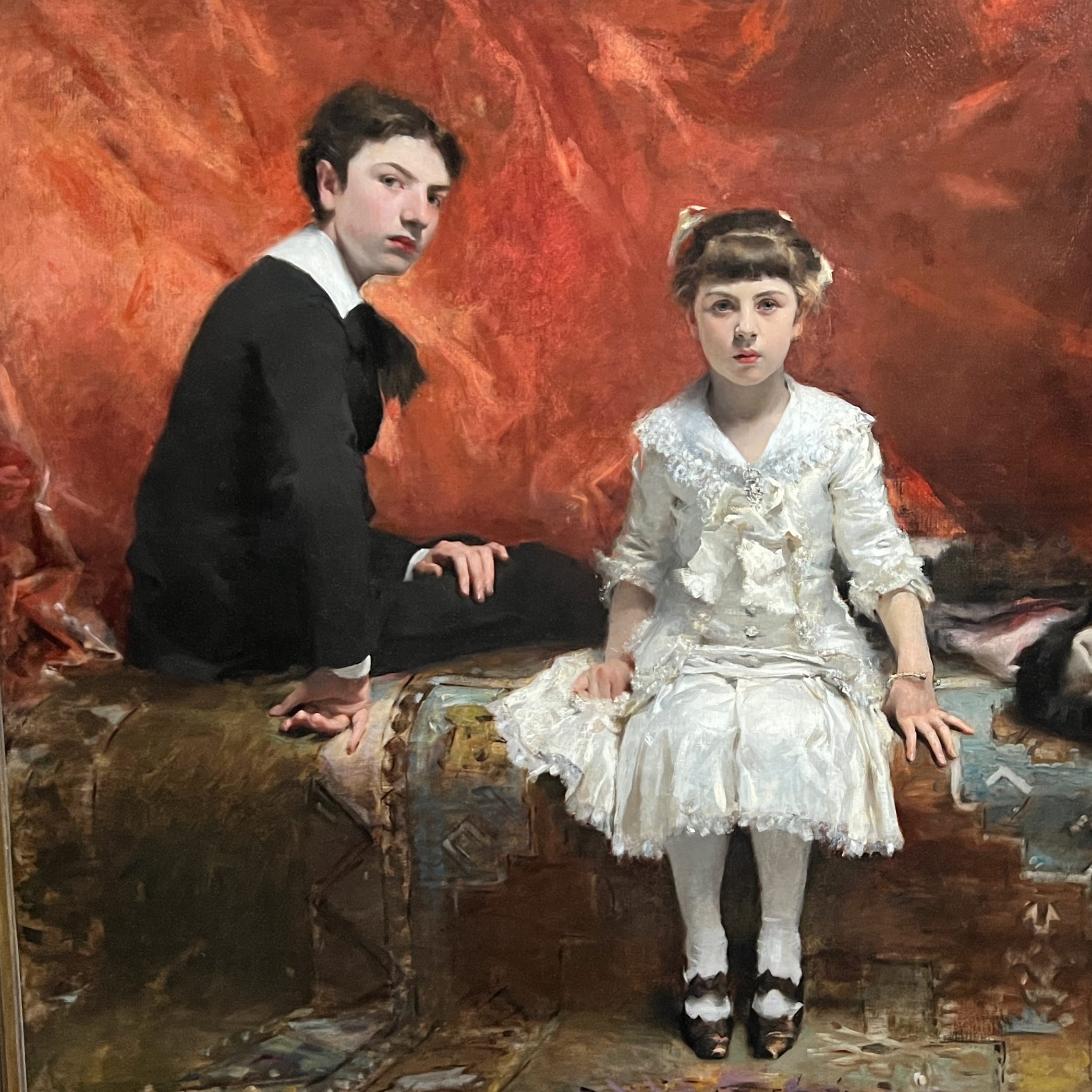
The expressions on their faces, lordy, it must have inspired countless horror film directors over the years (I was immediately reminded of the young twin sisters in The Shining). A background note on the wall explained that Sargent had the children sit 83 times for the painting, which brought to mind Kubrick’s penchant for filming endless takes. No wonder the girl seems so pissed off.
When making documentaries, especially personal docs, we’re often navigating the sometimes thorny power relationship between filmmaker and subject. I’ve rarely thought about the similarities to portrait painting, and it made me curious to learn more about this one.
Marie-Louise was 11, Edouard was 16, and John Singer Sargent was 25 years old the year this painting was created. The painting was created over a stretch of several months... As you might imagine, the sessions didn’t always go smoothly. Marie-Louise later wrote that she and her brother had argued with the artist about such matters as what clothing to wear and the way her hair was to be arranged.1
Pretty hilarious, I thought. Until remembering I was to film with my wife the next day.
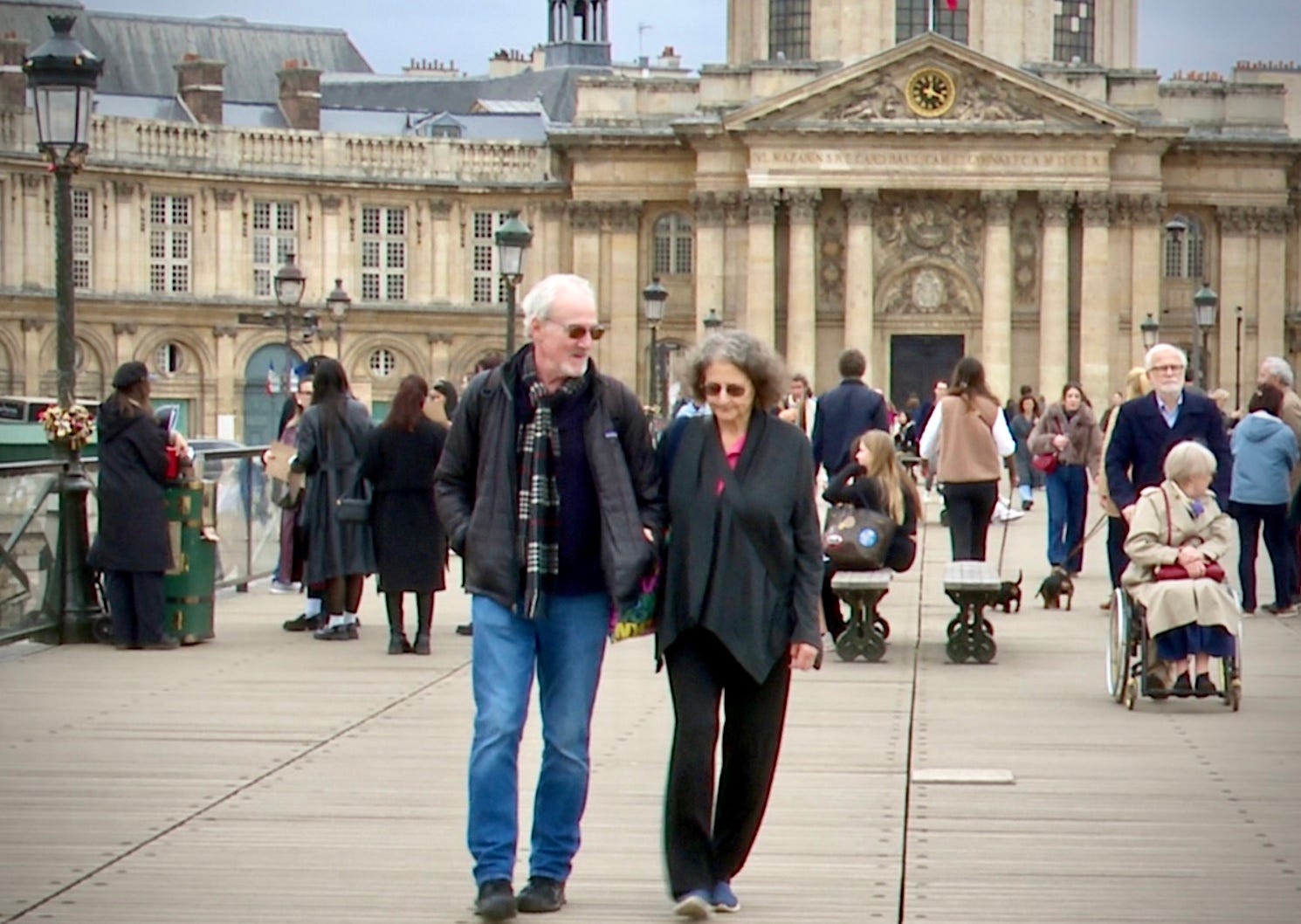
Scott, who bares an uncanny resemblance to Vincent Van Gogh, met us at on the Pont des Arts pedestrian bridge overlooking the Seine. Meditating together is a running motif in the film, and Scott had found a bench where we could face each other and do it right there out in the open. If that sounds too set up or cheesy, a folk singing busker started playing right next to us and we had to try hard to keep from laughing.
I told Marj just to ignore the camera, ignore the stares of passersby and be her usual charming self. And since I’m such a charming companion, I reminded her, and we’re in the city of love, and I’m the fella, don’t forget, that she’s been madly in love with for the past 40+ years, thankfully, she complied.
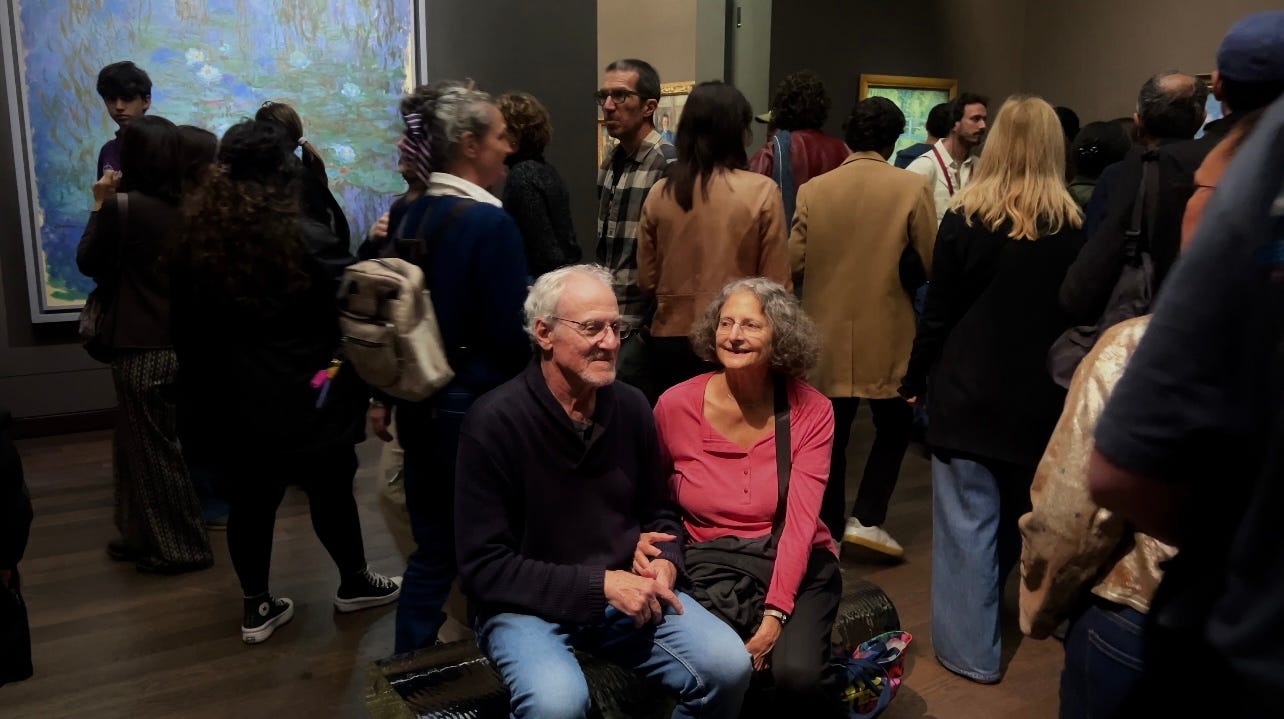
Filming continued as we made our way to the d’Orsay to shoot the all-important sequence with the Monets that I imagine will end the film. I handed my iPhone to Scott and the hordes pretty much ignored us, constantly passing by both in back and in front of us, just as I’d hoped. If guards were even around, they didn’t take notice. This kind of filming anytime and anywhere on the fly still astonishes me.
I could tell Marj was starting to get tired of it and we had all we needed, so I called it a wrap and we headed out, making a detour on the way for a certain photo of Scott I wanted to take as a thank you.
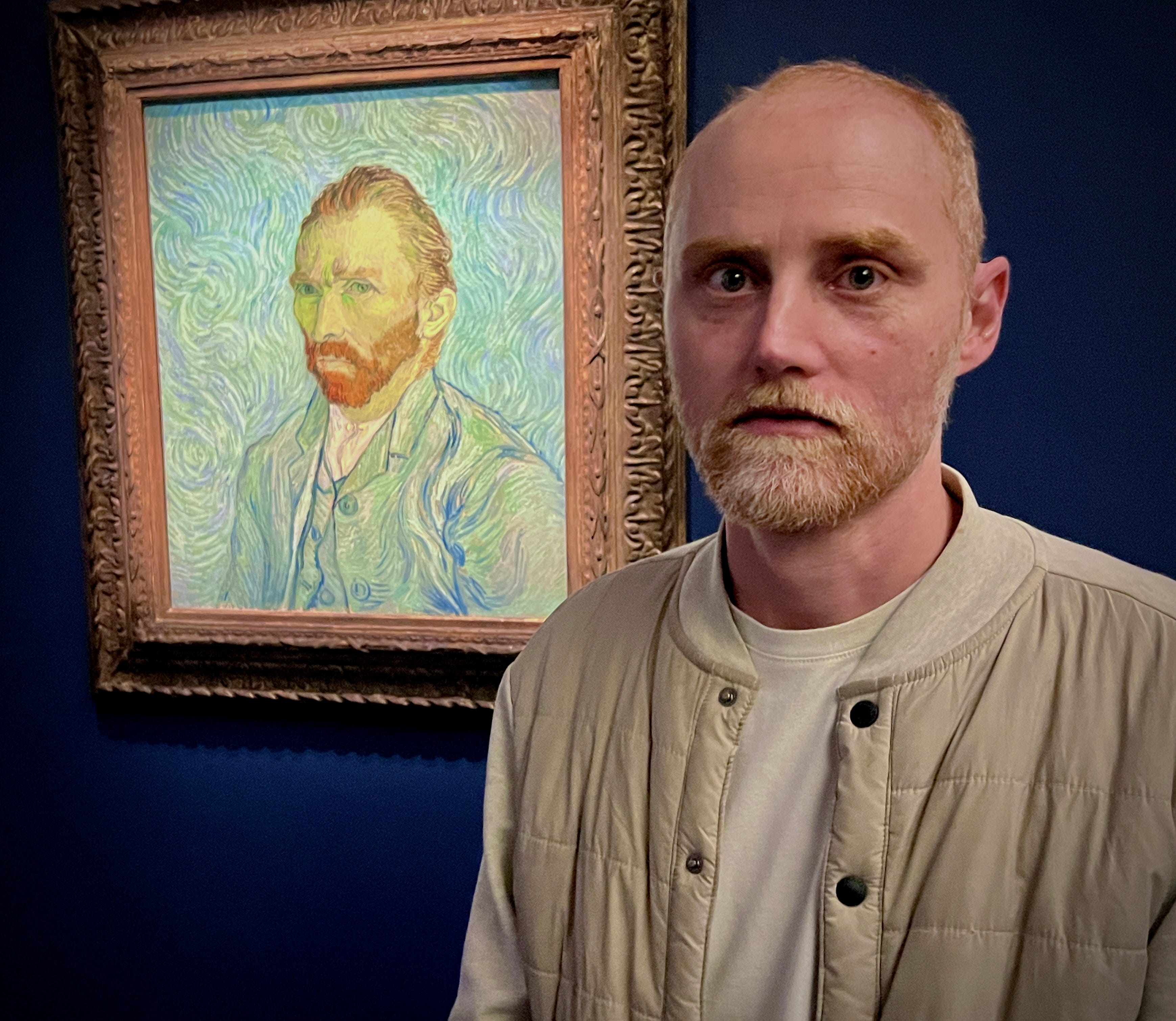
I was pretty pleased with myself. Mission accomplished, and with barely breaking a sweat.
That is, until I woke up in the middle of the night and couldn’t get back to sleep. For the first time all trip, my mind was racing full throttle like it does so often back home. And then, holy shit, it suddenly it dawned on me that I had forgotten to have Scott shoot any establishing footage of me and Marj walking through the museum looking at the paintings. I couldn’t believe it. What a fucking idiot I am!
Trying not to panic, I took a deep breath. If I were doing a consulting session with myself, I thought, what would I tell my client? Maybe I’d tell him he’s established that his mind always wanders when he meditates. Maybe he can cut directly from him meditating on the bridge to the shot of him and his lovely bride on the d’Orsay bench. And maybe an elegant bit of narration is all he needs to make the transition.
I’d remind him that it doesn’t really matter whether that possible solution will eventually work or not. The edit room is where the final creative decisions will be made. And that somehow you and the editor will find a way. You always do.
After I walked myself down from the ledge, in a lingering 4am moment of calm and relief, I had a sudden epiphany. Why not begin the story right now in 2025 as we revisit Paris for our 40th anniversary, and then flash back ten years earlier to our 30th and the discovery of the love letter? Doing it that way avoids telling the story chronologically from the beginning, which puts the focus way too much on the solving of the mystery.
It also alleviates the biggest problem we’ve had over the years in pitching Betty & Henri (& Me) to funders. While they love the story and love the mystery, it always comes down to whether I’ve found the couple, and how I’ll end the film if I never do. This way, everyone presumably knows that I haven’t found them, and the running question becomes why. Why have I continued to search for them all these years? Why has the letter obsessed me for all that time? And why does the love letter resonate so strongly for me in the context of a seemingly happy 40-year marriage? The film becomes more of an existential mystery, with more of a focus on its deeper themes.
Again, things can always change in the edit room, but I’m pretty sold on this new story structure. And if nothing else, I was able to get back to bed and sleep like a baby.
The moral of the story is I’m convinced that taking a few days off, resting and relaxing, looking at and reflecting on great art and getting away from the never-ending churn of work laid the groundwork for my creative breakthrough.
Now that I’m back in New York City, home to some of the world’s greatest museums, parks, restaurants, concert halls and theaters, I’d like nothing more than to see if I can build it into an ongoing habit.
I’d be curious to hear what others (ie. you guys) do to generate creative breakthroughs. So, feel free to…
The quote is from a terrific post on artist Linda Tracey Brandon’s Blog
As an editor, I sometimes get creative breakthroughs when I step away from the footage, and start doing something completely unrelated, like walking the hounds, or ironing pillowcases (so I can feel like I am in a 5 star hotel at least once a week), or chopping onions and carrots to make ragù, or stuck in LA traffic.
And if I may offer an unsolicited suggestion…. I would be really interested in the text of that letter. Because you could start the film of you & Marj on your latest 40th anniversary trip, quote / narrate a few lines from the letter, making the viewer think it is something you wrote about Marj, and then slowly reveal that you did not write it, but it was something you found and started your quest. Maybe you could sprinkle phrases from that letter throughout the film.
For some reason, because of the letter, the Antonioni film “La Notte” with Marcello Mastroianni & Jeanne Moreau comes to mind. Don’t know if you remember the ending, but it features a love letter. But it’s quite a tragic ending. Now that I think of it, I wonder if that’s what inspired Noah Baumbach to bookend “Marriage Story” with a letter.
Funny, I find every time I go to a museum or an exhibition, I leave very inspired. In fact, it's something I want to schedule and actually do - go to a museum for an hour or 2 and then directly to my studio and see what happens.
Someone here mentioned doing their best work early in the morning. I completely agree. Take that dream state with you into your work space and get lost in it. Travel is always good for inspiration too, though I like to dedicate myself to the place I'm in and then later be creative. And we were both in Paris at the same time! I love that.
Hot tip for anyone who loves the Musee d'Orsay... become a member and you will gain access every day BEFORE the hoards of people come in. It's not expensive and to have time ALONE with Van Gogh, Monet, Gaugin and everything else in the museum is priceless.
Great post Doug - thanks.