
What Happened When I Decided To Interview My Parents On Camera
And why I think you should, too, if you can.

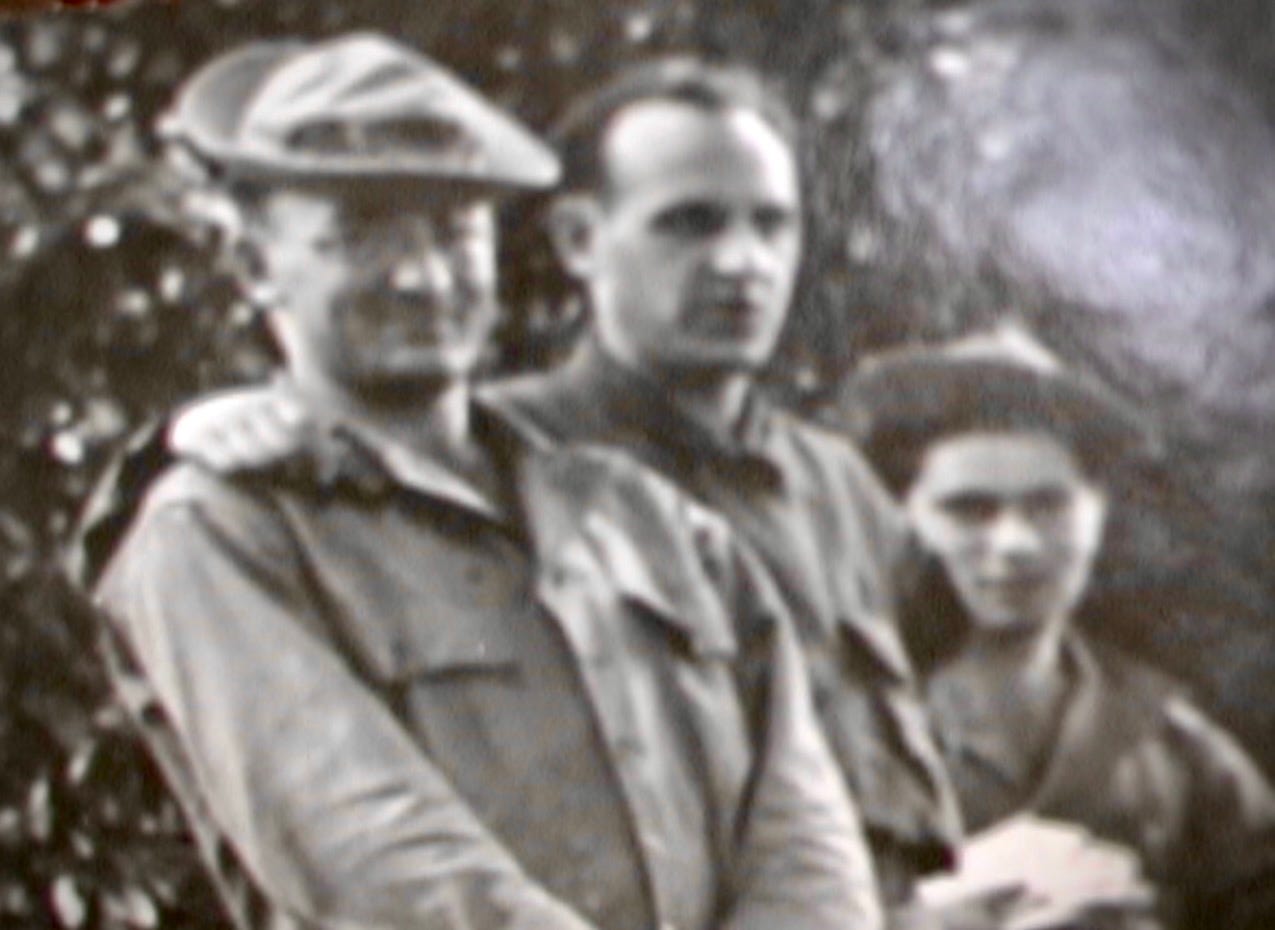
I never set out to make a documentary about my parents’ marriage. I mean, who in their right mind wants to go there?
In the beginning, I just wanted to hear the war stories.
It was Memorial Day of 1995, and I was reading the usual tributes to the brave soldiers who fought and died in wars past. For some reason it struck me how little was mentioned about all the survivors. The soldiers who manage to return home alive carrying wounds seen and unseen, and just want to put it all behind them as if it had never happened.
Like my dad.
Growing up, I couldn’t recall my father ever uttering a word about his experience of being in the Army during World War II. Not once. He had no war memorabilia at all. The blurry image above is the only photo I ever saw of him in uniform.
I decided the time was right. A few days later I was on my way to our family home in Port Washington, NY with my video camera in hand.
I thought it would be a challenge. Dad was never one to talk about himself, period. He took great pride in being calm and even-keeled, but was emotionally distant. I loved him, of course, and he loved me, I never doubted that. But there I was in my early 40’s and I still didn’t know the man. He remained a total mystery to me.
I wanted his war stories, for sure, but I also wanted to get a better sense of who Mike Block was as a person, and not just my father. I figured that by putting on my professional filmmaker hat and formally interviewing him on camera it would allow me to ask questions I wouldn’t dare ask him in real life.
I feared he’d talk mostly in platitudes, so to put him at ease and get him talking I framed it as a family history interview. Something simply for my sisters and I to have for posterity.
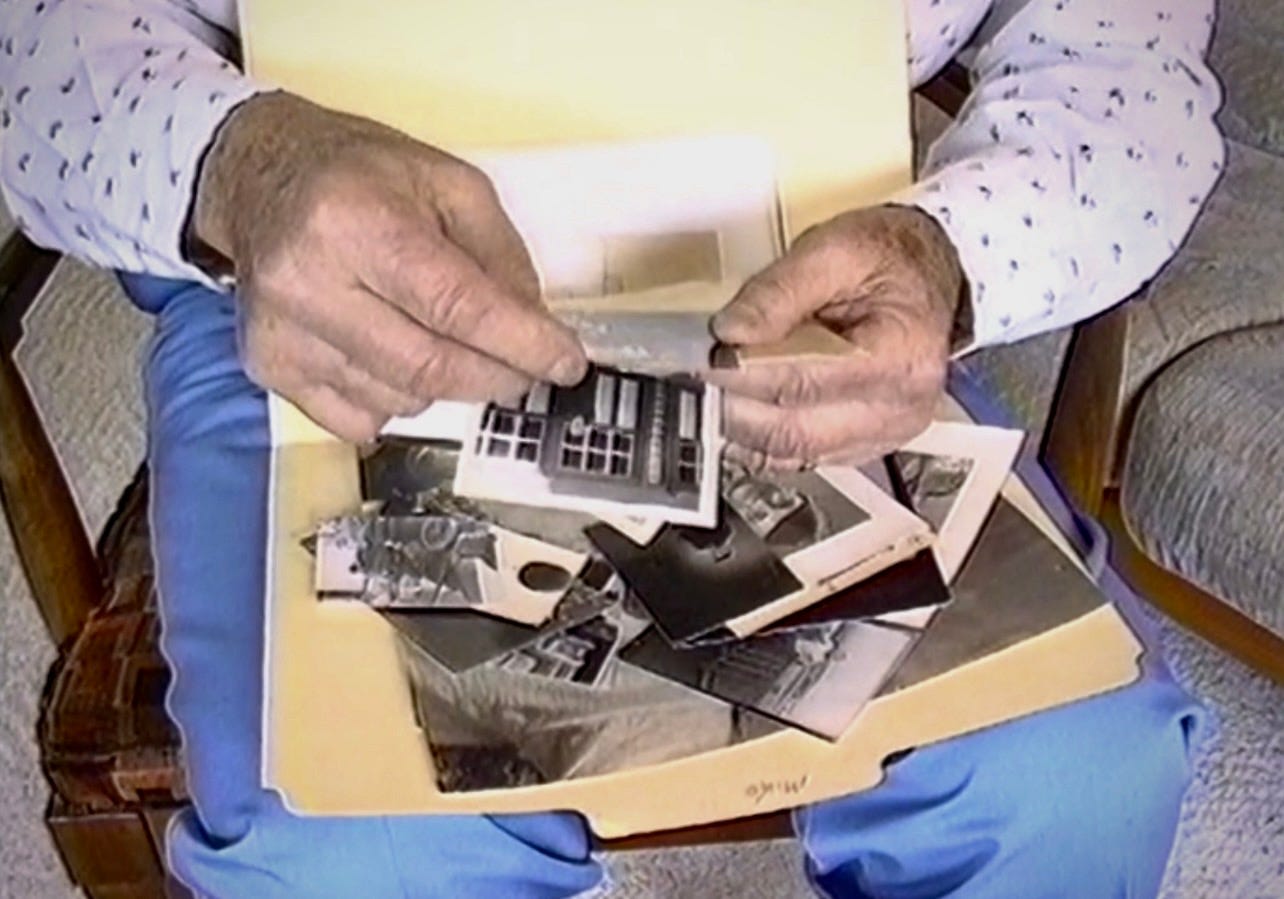
I asked Dad in advance to gather a few family albums, and we started going through the photos. He was the keeper of the family tree and, as I’d hoped, identifying the people in them put him in a reminiscing mood.
Some were stunners, like this one of his grandparents on his mother’s side back in Russia in the late 1800s.
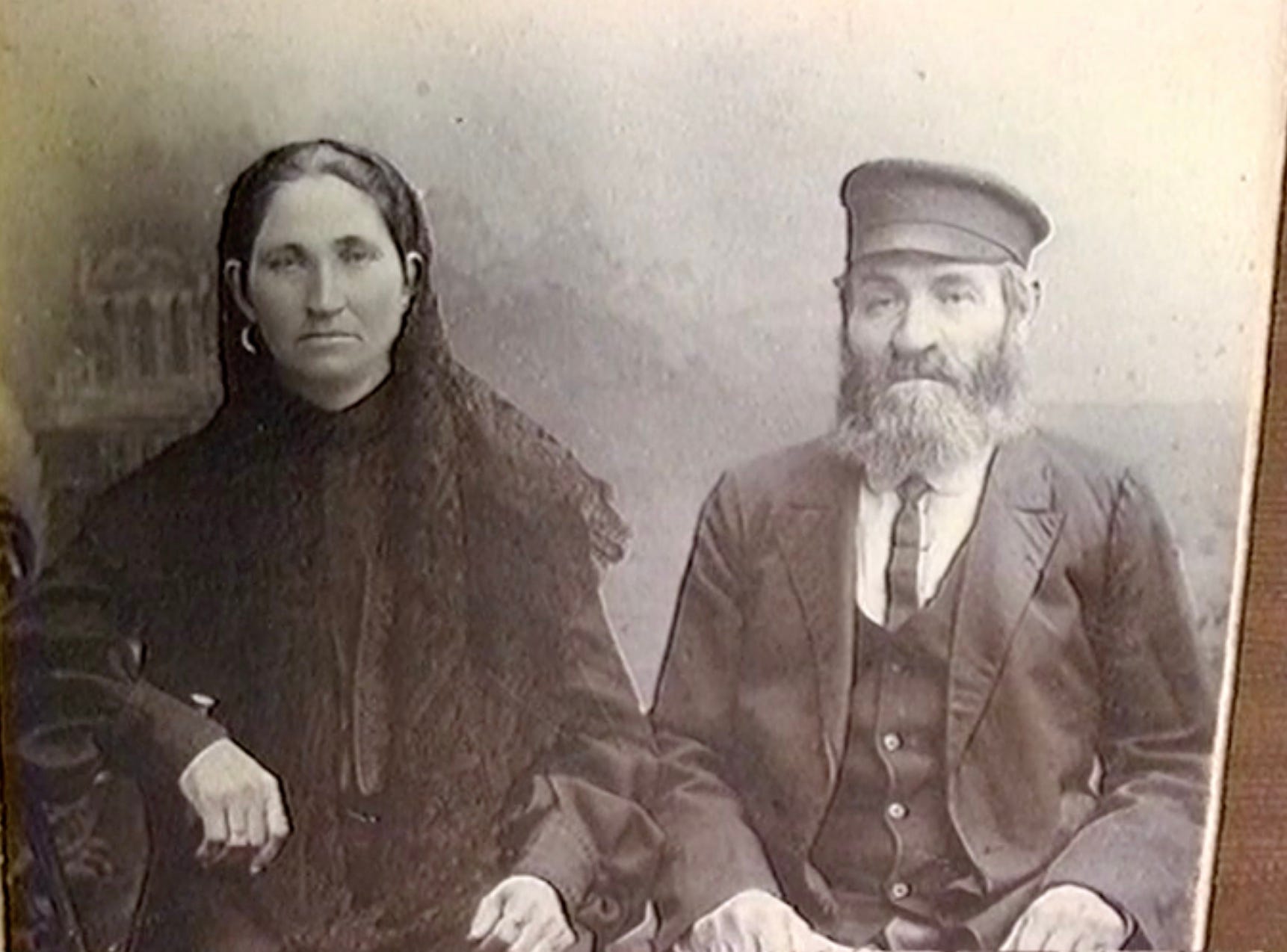
“Did you ever meet them?” I asked. “No, they never made it over here,” he replied.
I didn’t worry about lighting or framing the photos all that well, it was simply for I.D. purposes. Dad slowly grew more comfortable.
I moved on to asking about his childhood, beginning with his earliest memories. I knew his father Benjamin (my middle name) had died in an accident when he was young. I didn’t know Dad was just 12 at the time. His uncle broke the news to him by saying “You’ll have to be the man of the house now.”
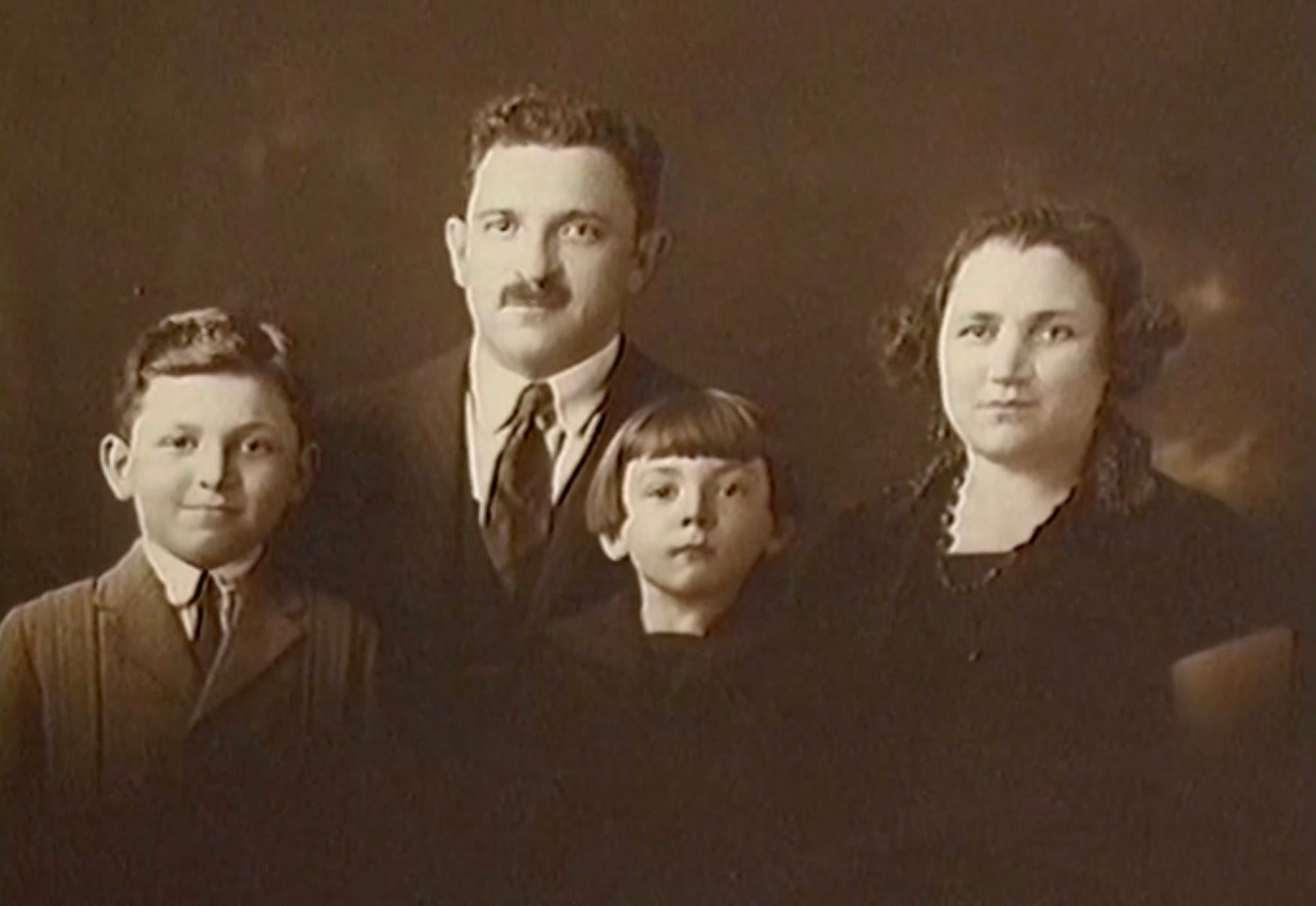
Family portrait, 1927 (my dad in middle with Beatles haircut)
Gradually we made our way to his college years and how he met my mother. He shared the secret of his success in wooing her: the Coney Island Cyclone. “By the end of the ride she was practically sitting on my lap.”
His college had a rifle team and he was the captain. A natural segue to asking him about the war.
At that point his affect changed a bit. He got a faraway look in his eyes, and it were as if he was talking about a third person. He had some funny stories, and some harrowing ones, too.
Dad volunteered for the army because he worked in a drug store and the owner knew someone important and promised he could get him a cushy job. It fell through, he was assigned to a platoon and before he knew it they were dropped in a forest in France in the middle of winter with the Germans close at hand.
I was curious if he ever killed anyone.
Once he got going, dad regaled me with army stories for a full half hour. But when I began asking about his marriage he made relatively short shrift of it. Especially the parenting part.
“Ellen was born, then Karen, then you. You were easy children for the most part, and that was that.”
“Geez, dad, you just went over a two decade span in, like, two minutes!” I fired back.
“I was 36 when Lucy was born,” I added, “and raising just one child feels like full time work and then some. You had three by the time you were 33. What was that like for you?”
“No big deal. It was what people did then. Nobody questioned it.”
The rest of the interview went along like that. He was especially guarded when it came to talking about my mother. He wasn’t going to spill any beans.
Still, I learned a lot about my father, and he came away from it genuinely pleased that I cared enough to ask so many questions.
A few months later I did a similar family history interview with my mom, and it was a very different matter. For her, it was part testimony and part unfiltered gripe session. My overall takeaway was that their relationship went through a very unhappy phase, but then my mother did therapy, my father had a men’s group, and it was just enough to save the marriage.
I didn’t view the videotapes, but they were treasured items. If a fire broke out at home they’d be among the very first things I’d grab before I fleed.
In early 2002 my mother died suddenly and unexpectedly. Three months later Dad called to announce he was down in Florida and living with his secretary from forty years before, Kitty.
Within the year, they married and sold the house in Port Washington. Two weeks before the movers came, I drove out to there thinking it was the last time I would see the family home I grew up in. I took along my camera, of course.
I didn’t expect to interview my dad. I also didn’t expect to be emotionally gutted. All the rooms were close to being emptied out, with one exception. The basement workshop, which was where Dad spent so much of his time during my childhood, hadn’t been touched. I came upon him there sculpting a piece of woodwork for Kitty on a lathe. There was something poignant about it, and a beam of light from above lit him perfectly.
“This was your refuge from Mom, wasn’t it?” I asked, rolling tape. And for the first time he revealed how unhappy he had been at times in the marriage.
I’m sure dealing with over fifty years of memories put him in the mood to talk, just as the photo albums had done for the family history interview. But I could sense my father was ready, and even eager, to share what went on in that house all those years. The war survivor finally seemed at peace. So I came back two days later with my camera to keep the conversation going, still thinking I was just capturing it for posterity.
Then came the pivotal moment when it turned into a film, just like that. We were parked in the driveway having just dropped off a pile of clothes and assorted stuff at the local temple. I worked up the nerve to ask if he missed mom.
“No,” he sighed, “I don’t miss her. I tried my best for her, but by the end it was no longer a loving association. It was just a functioning association.”
Suddenly, I flashed on my mom’s interview and realized I had her side of the story on camera, as well. And that she could, in effect, come back from the grave to tell it.
In that moment I understood what was unique and yet so universal about this ordinary family of mine. We think we know our parents, but we really have no idea.
I continued shooting with Dad and Kitty until the night they left the empty house for good. I eventually named the film after its address: 51 Birch Street. And from that time on, he and I would talk openly and freely about pretty much everything.
Whenever I did a Q&A after one of its screenings, I ended by saying if there’s one thing you leave with today it’s this: If your parents are still alive, don’t hesitate to sit them down in front of a video camera (your phone will do just fine) and do a family history interview. It could well be among the most valuable possessions you own.
And whenever I do an initial consult with a filmmaker making a personal documentary, there’s one question I inevitably ask. Have you interviewed your parents?
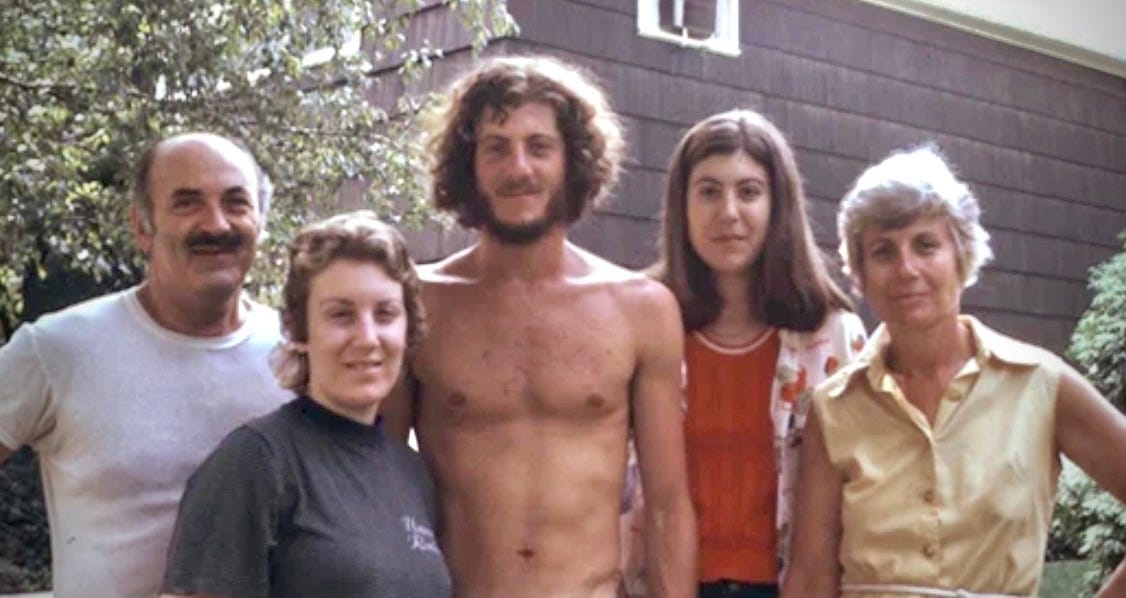
If you’ve ever interviewed your parents, I’d be curious to know what the experience was like for you. And for them.
51 Birch Street is available to rent or buy on Amazon Prime and Kanopy.
Doug,
Great piece, thanks for posting it. I’m going to watch your film on Kanopy today.
I’m just finishing my own personal doc, “Maxie & Shelly and the Whole Mishpocha.” A story that also has a Long Island thread and links back to Russia.
The film is an homage and a remembrance to a colorful cast of New York characters and to their culture, experiences and lives. A piece of history I was lucky to be a part of and which is quickly fading away.
Unfortunately my parents were gone when I started this project, but I did get to interview some of their contemporaries. I started the film in 2017, in my 60s, and I’m finishing now, at 75. In those years I researched, interviewed, wrote, and reconnected with folks - unearthing many photographic gems (like the shot of your great-grandparents.) Like you, I also encourage everyone with a smart phone to interview their parents NOW. They are the archival librarians of our personal story and they are only available for a specific period of time. Don’t take their presence for granted.
Making the film has given me a perspective on my life, my culture and my place in the world, and has been a fascinating journey.
I’m looking forward to your event at DC/DOX next month. If your interested in viewing my film I’d be more than happy to send you a link.
Thanks for your work,
Jeff Roth
jeff@focusedaudio.com
So powerful, Doug, thanks for sharing. I’m grateful for a family history course I had at the University of Maryland when I was an undergrad. I was already interviewing my grandparents and other relatives on occasion, but the class got me to think about doing these interviews more comprehensively, like a journalist or historian, but without hiding the fact that you are intimately connected to the person you’re interviewing, because that’s very unique and part of the story.